
iKiwi

NEW ZEALAND · Visa Case Studies

People just like youwho already got their visas

Refusal histories, funds scrutiny, career changes at 40, whole-family migration — one of these nine real, fully approved cases may match your situation.

9

real cases

3

visa categories

100%

with complete processing timelines

01Student Visa

Two Prior Refusals, Approved Directly — No Further Information Requested

Pathway Student Visa

Client Profile
Ms Z · 31 · Sales professional transitioning to study
Processing Time
45 days (31 working days)
Lodged → Approved
2026.03.27 → 2026.05.11
Further Info / Phone Verification
None / None
Prior refusals ×2RMB 600k from multiple transfersLow client confidence

Her explanation letter was proofread word by word — sent back once just because a word was split across two lines — and on approval day we even had the old passport number on the visa corrected. How this case got through after two refusals is documented in full below.

Overview

Ms Z, 31, worked in sales with IELTS 5.5, self-funded her study in New Zealand on a Pathway Student Visa — one visa covering language courses, master's pre-study and the master's itself. She already carried two visitor-visa refusal records, and her account funds included two large deposits built from multiple transfers by different people. Lodged on 27 March 2026, approved on 11 May — no further information, no phone verification, 45 days of processing.

Background

In May 2024 Ms Z applied for visitor visas to the United States and Australia and was refused by both. On 5 December 2025 she came to us about studying in New Zealand — language courses first, then a master's pathway. Fully self-funded, no accompanying family.

In our first conversation, schools and programmes came second. What came first were two very practical questions: what are my actual chances, and will I get a refund if the visa is refused? People with refusal records arrive carrying exactly this worry — far too often. How to design the plan and manage expectations starts from the very first conversation.
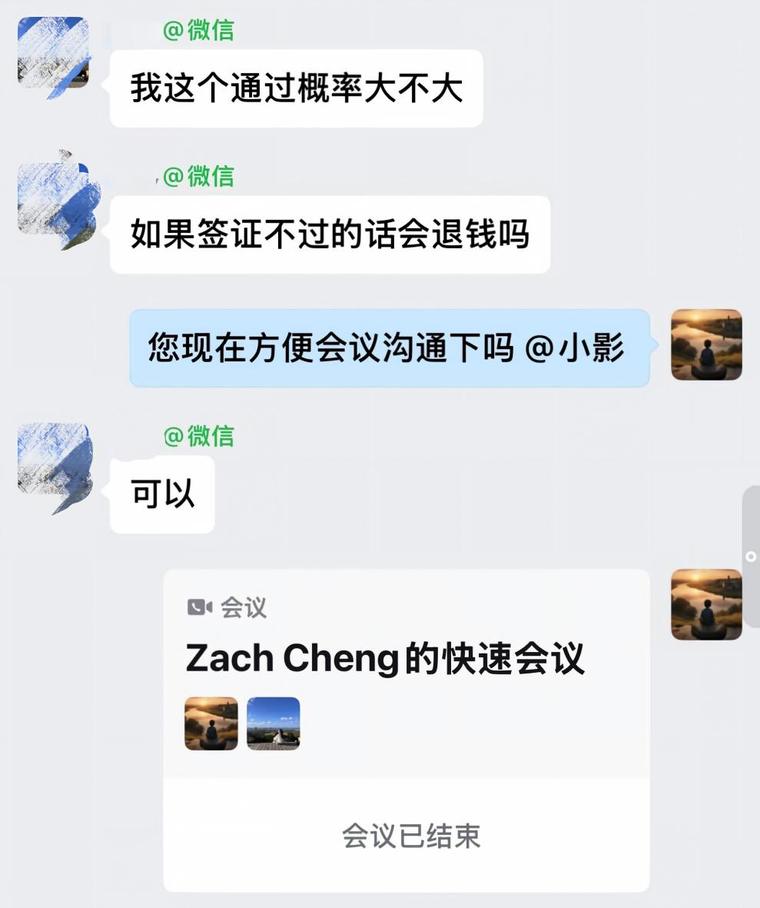
NZ student visa consultation record
During consultation: her first questions were approval odds and refunds

Key Challenges

This case gathered the three risk types that most often go wrong in New Zealand student visa assessments.

Refusal history. Refused by both the US and Australia in quick succession — the New Zealand application had to declare it honestly. What Immigration NZ would see was two refusal records, and their first question would inevitably be about motive and overstay risk.

Source of funds. A Pathway visa requires funds covering all tuition and living costs. Of the RMB 600,000 in the account, two large deposits came from multiple transfers by different people — if the source cannot be explained, the amount being sufficient changes nothing.

Client confidence. Through the decision stage she repeatedly sought reassurance on approval odds and refund terms. The hard part of such cases is half documents, half putting the person's mindset and expectations in order.

What We Did

Judging the refusal history came before any promise. Two refusals are not a death sentence, but neither do they disappear with one sentence of explanation. We took the case by first sorting through the specific reasons for both refusals, mapping them against New Zealand student visa assessment logic to judge which points would be probed and what evidence would counter them — and built the application on that basis, giving her a realistic view of approval odds. The plan was built on judgement — not on taking the case first and figuring it out later.

The funds explanation was tailored to her real background — never templated. The two transfers had different backgrounds, so the evidence packages countering each doubt differed too. What to supplement was decided by her actual circumstances, with written declarations from the transferers — the nature of every sum traceable, so the officer could follow the money through the documents alone.

Document quality had a standard. The explanation letter represents the applicant's honesty — a single ambiguity, and the client pays the price. We proofread it word by word; the first draft was sent back simply because one word was split across two lines. No formatting flaw was allowed to leave room for misreading.

The service did not stop at approval. On approval day we spotted that the visa still carried her old passport number and contacted the visa officer to correct it the same day. A dedicated tutor guided her tuition payment one on one, and the team followed her language-course progress all the way until she passed the final exam. The journey of studying abroad starts here — it does not end when the visa arrives.

Processing Timeline

2025.12.05First consultation: refusal history and funds assessment completed
2026.03.13Funds plan confirmed
2026.03.19Transfer backgrounds confirmed transfer by transfer; explanation letter finalised
2026.03.27Application lodged
2026.05.11Approved — no further information, no phone verification, AIP stage skipped
2026.08.11Language course exam passed

Outcome

The visa was approved directly on 11 May 2026 — the Approved In Principle (AIP) stage was skipped, with no further information requests and no phone verification throughout. Processing took 45 days (31 working days), and the visa was valid until March 2028.

On lodgement day the responsible adviser estimated approval within 7 weeks — the actual 45 days landed inside that window, matching the estimate. There was no luck in that judgement: the team handles New Zealand visas of every category year round, and knows the rough rhythm of every case type.
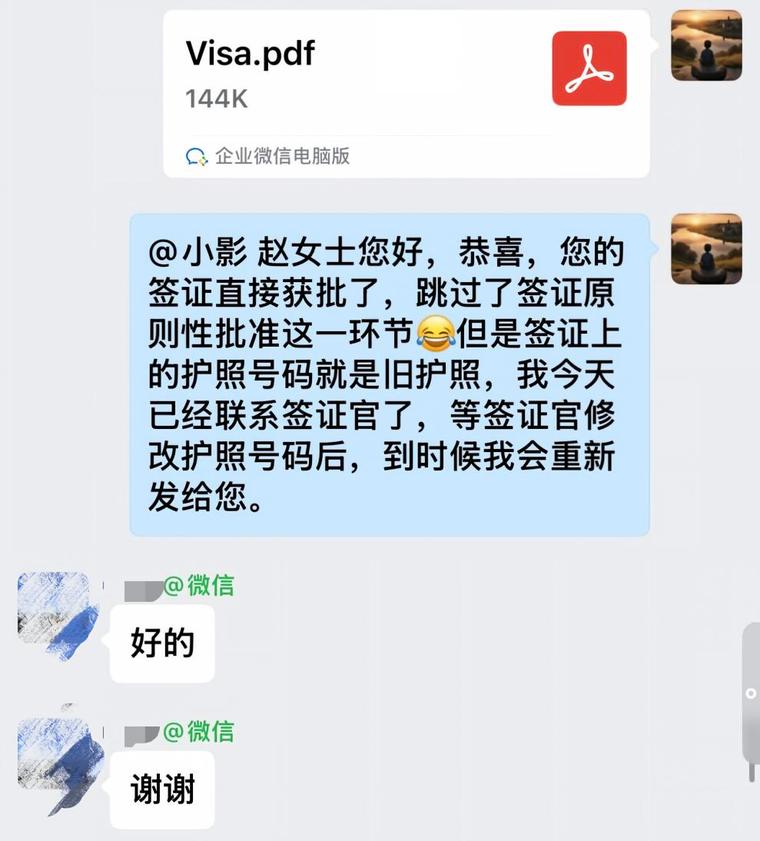
NZ student visa approval notice
Approval notice; old passport number correction started the same day

Client Feedback

On approval day she replied in the group chat with two words: thank you.

On 11 August, after her language course exam, she volunteered: I passed.

To Applicants in Similar Situations

If, like Ms Z, you have refusal records or account funds built from multiple transfers, what you need most is an honest professional assessment — don't sentence yourself to failure first. Refusal histories and fund sources are not dead ends; what matters is having someone who can judge where the problems lie, what evidence counters them, and how to write explanations so thoroughly that Immigration has no reason to ask. Tell us your situation, hear one assessment first, then decide whether to begin.
02Partner Work Visa

Previously Declared Single, Rescued Through the Partner Work Visa and Approved

New Zealand Partner of a Worker Work Visa

Client Profile
Mr Z · 23 · Joining his partner in New Zealand
Processing Time
69 days (49 working days)
Lodged → Approved
2026.02.27 → 2026.05.07
Further Info / Phone Verification
Yes / Yes
Declared single in a past applicationRelationship evidence reinforcementPhone-verification discrepancies

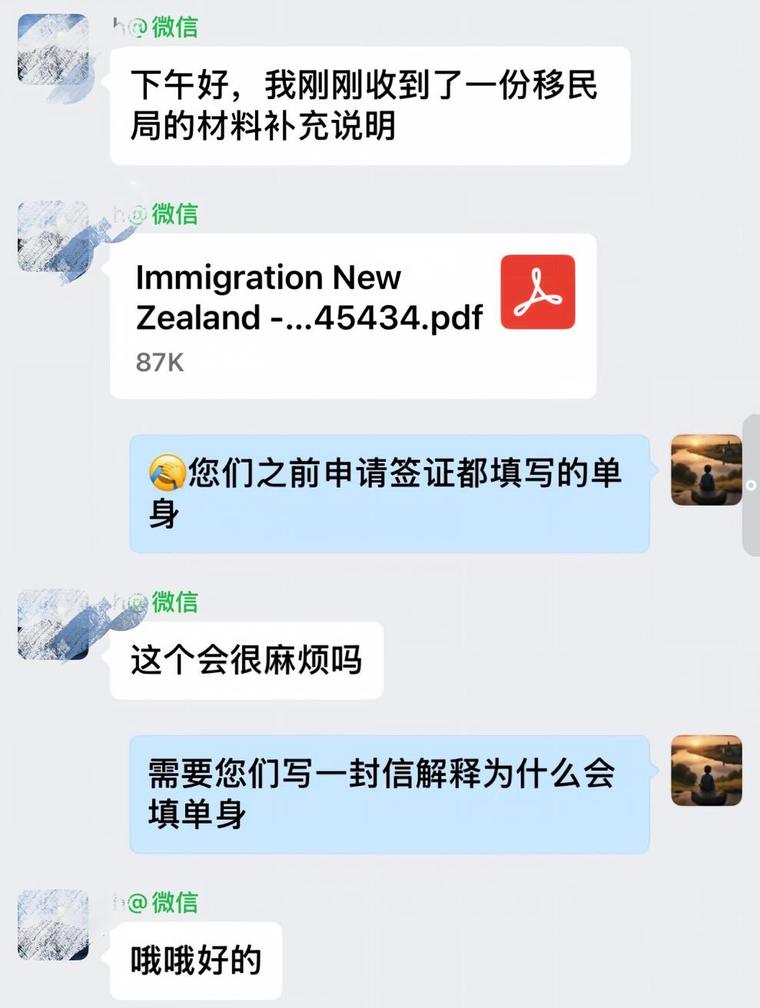
Immigration dug up an application from two years ago and asked why he had declared himself single back then. One explanation letter and a batch of reinforced relationship evidence caught the challenge at the further-information stage. How this case was rescued is documented below.

Overview

Mr Z, 23, applied for a New Zealand Partner of a Worker Work Visa on the basis of his genuine relationship with his partner already in New Zealand. Such cases are not complicated in themselves — the trouble came from an old record: when lodging that earlier visa application himself, the relationship-status field was mistakenly filled in as single, and this time Immigration dug that old information up. Lodged on 27 February 2026, through one challenge round and two phone verifications, approved on 7 May — visa valid for 2 years.

Background

First consultation on 3 February 2026, lodged on 27 February. The officially published processing time — within 6.5 weeks — was shared on lodgement day. Barring surprises this should have been a routine case. In late March, Immigration's further-information letter arrived — pointing at something nobody had expected: in his prior visa records, his relationship status read single.

NZ partner work visa challenge communication record
Immigration challenge: the two-year-old declaration surfaced

Key Challenges

Flawed past declaration. In 2024 the client mistakenly declared himself single on an application he lodged himself — never mentioned to anyone, it surfaced during this assessment and demanded an explanation.

Time depth of relationship evidence. Years had passed since the relationship began — materials had to solidify the chain of how it developed so the officer could verify it.

Phone-verification risk. Immigration called the client's partner and family in turn, and on intermediary information their answers diverged from the facts on our side — the risk of another collateral hit was live.

What We Did

First verify the facts, then set the rescue plan. The day the challenge arrived we pulled the historical application record and confirmed the misdeclaration sat in the application the client had lodged himself. The tone of the rescue was set accordingly: explain honestly, reinforce the evidence. Without a clear diagnosis, that one chance at further information would have been spent pointing in the wrong direction.

The explanation letter reflected the facts; the relationship evidence went deeper. We guided the client through an explanation document on how the single-status error happened, while adding further relationship evidence — genuineness is proven not by assertions but by the evidence chain. The parts of New Zealand's partnership definition the client was unfamiliar with were explained as well.

Coordinating the narrative before and after phone verification. When phone verification reached the partner and family, their answers on intermediary information didn't match the facts. We compiled the discrepancy into an explanation document and guided the client to supply the correct information to Immigration — and rehearsed whatever might be asked next, so the misunderstanding could not keep growing.

Processing Timeline

2026.02.03First consultation
2026.02.27Application lodged; official processing time shared
2026.03.30Challenge received; historical declaration confirmed; rescue initiated
2026.04.07Explanation letter and supplementary relationship evidence uploaded
2026.04.16Partner and family phone-verified in turn; responses coordinated
2026.05.07Approved

Outcome

The visa was approved on 7 May 2026 — valid 2 years, multiple entry. Processing took 69 days, longer than the published standard, because of the mid-process challenge, further information and two rounds of phone verification. For cases with flawed past declarations, the outcome comes down to the quality of the rescue: facts verified, explanations done properly, evidence reinforced — the challenge never turned into a refusal.

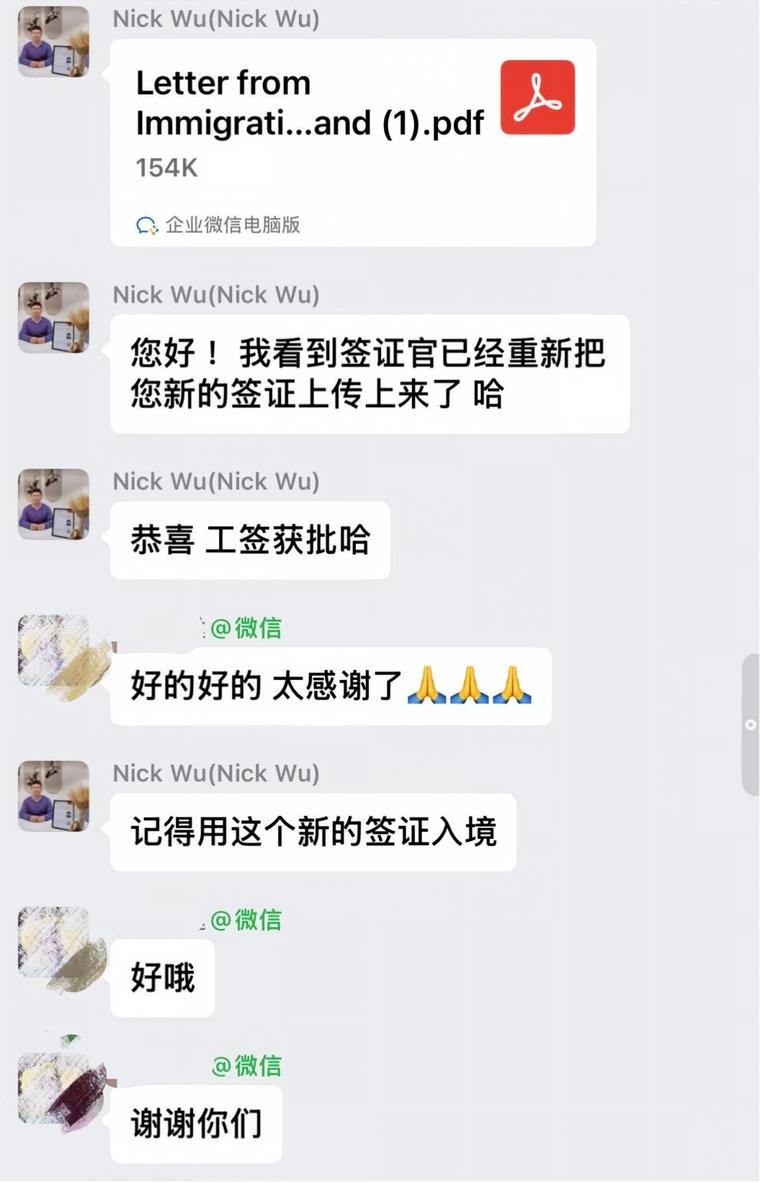
NZ partner work visa approval notice
Approval good news, on the day the work visa was granted

To Applicants in Similar Situations

If you misdeclared or omitted something in a past self-lodged application, don't gamble that it doesn't exist — Immigration can see the history. Proactively clarifying old issues beats reacting when a challenge lands. Those in similar situations can walk us through how that application was lodged, assess the impact first, then decide how to lodge this time.

03Student Visa

Downward Qualification Shift plus Offshore Sponsorship — Approved After Video Interview, No Further Information

New Zealand Student Visa · Master of Marketing, University of Auckland

Client Profile
Ms C · 32 · Arts background crossing into Marketing
Processing Time
42 days (30 working days)
Lodged → Approved
2026.08.06 → 2026.09.17
Further Info / Phone Verification
None / Yes (video interview)
Downward qualification shiftOffshore sponsorship funds returned twiceVideo interview

The sponsorship funds were remitted from offshore twice and returned twice — the lodgement nearly missed the enrolment deadline. The night before the video interview the client was still rehearsing answers from her customised question list. The full record from first consultation to visa in hand is below.

Overview

Ms C, 32, studied art through bachelor's, master's and doctorate, and planned to move into business after her PhD — targeting a Master of Marketing at the University of Auckland. PTE 63; study funds sponsored by her father working offshore. A downward qualification shift, plus cross-border sponsorship, with a last-minute video interview thrown in mid-process. Lodged on 6 August 2026, approved on 17 September — no further information, 42 days of processing.

Background

At the first consultation on 26 March 2026 Ms C was travelling overseas — she completed the risk assessment form on the road, and all plan discussions ran remotely. Her language score was already there and the plan itself was clear. The trouble sat in two places: an arts background crossing into business was a reversed pathway whose study motive had to convince Immigration; and her father had long worked offshore — with the sponsor not in China, how the sponsorship funds could land compliantly was anyone's guess at that point.

Key Challenges

Downward qualification shift. Art through all three degrees, and the next one is a business master's. Faced with this reversed structure, the visa officer would very likely probe the real purpose of study.

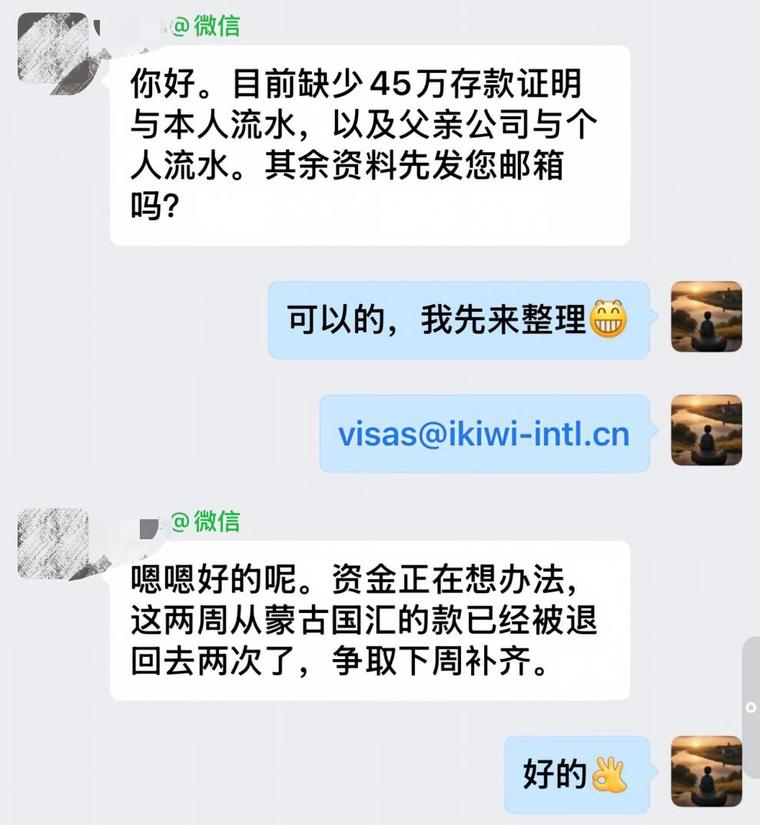
Cross-border sponsorship. Her father's remittances from offshore were returned twice, the deposit certificate kept stalling, lodgement pushed back again and again — and the client worried she would miss enrolment.

Phone verification. Mid-assessment, Immigration called requiring a video interview the next morning. Courses, personal background, source of funds — anything could be asked.

NZ student visa sponsorship funds communication record
Funds blocked: offshore remittance returned twice

What We Did

First make the study plan coherent — then talk about lodging. In downward-shift cases the battle is mostly won before lodgement. The career logic between an arts background and a marketing master's was organised into one coherent line for Immigration. One point to make: the field change was not a whim — it was the natural next step of accumulated experience. The study motive the client worried about most was defused at the document level in advance.

The sponsorship structure followed the reality of the funds. When the remittance route dead-ended, the sponsorship plan changed. With her father confirmed as sponsor, a full set of materials was rebuilt around his income and assets — sponsorship capacity no longer rested on any single in-flight remittance, and proof of funds was ready before lodgement.

Interview coaching arrived that same evening. On the very evening the interview notice arrived, a customised question list and mock session were in the client's hands. They would ask about courses, background, funds — each item mapped to her application documents. Someone who the night before had no idea how to answer was, by the next day's video interview, answering point by point.

Processing Timeline

2026.03.26First consultation; risk assessment completed remotely
2026.08.06Application lodged; official processing time shared
2026.09.07Video interview notice received; coaching completed that evening
2026.09.11Approved in principle; tuition paid
2026.09.17Visa granted

Outcome

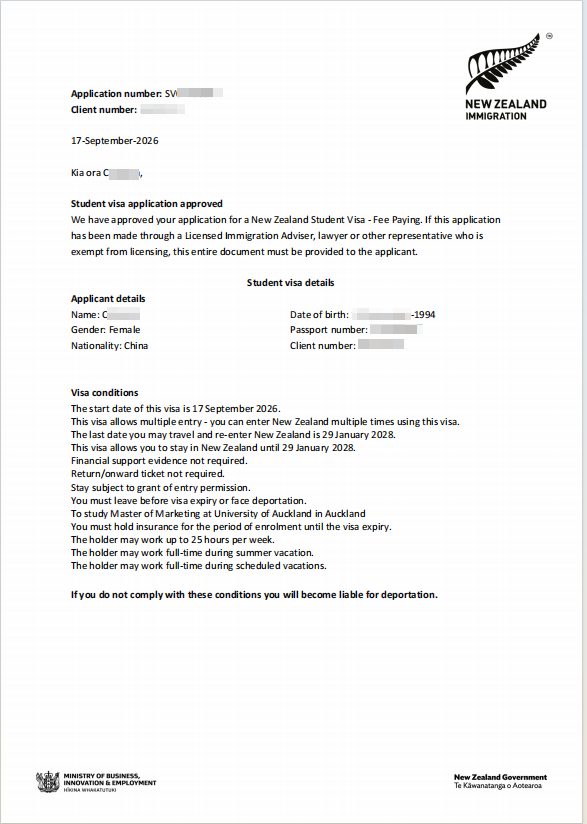
The visa was granted on 17 September 2026 with no further information requested — 42 days (30 working days) of processing, valid for 16 months. On lodgement day the published processing time was within 8 weeks; weighing the actual rhythm of recent similar cases, the team judged this one would hear back sooner — and approval in principle arrived in week 5. That judgement was not a guess: the team handles New Zealand visa applications year round and knows the rough rhythm of every case type.

NZ student visa approval letter
Immigration NZ approval letter, personal details redacted

Client Feedback

On approval day the client said in the group chat: thank you — this was really not easy. Talking afterwards, the two things she mentioned most were having questions answered at any hour during document preparation, and that targeted interview preparation.

To Applicants in Similar Situations

A downward qualification shift, offshore sponsorship — neither sounds easy, but neither is necessarily a dead end. Whether the study plan holds together and whether the funds path can be explained clearly — those two decide the outcome, and both must be thought through before lodging. Send us your education background and funds situation for an honest assessment first, then decide how to proceed.

04Student Visa

A Challenge Letter Listed Three Doubts — Approved After Responding to Each

New Zealand Student Visa · English Course Leading to an IT Master's

Client Profile
Mr D · 36 · Long-term overseas resident returning to study
Processing Time
41 days (29 working days)
Lodged → Approved
2026.07.01 → 2026.08.11
Further Info / Phone Verification
Yes / None
Source of funds questionedWeak ties to ChinaYears out of formal employment

Seven figures sitting in the account, and the visa officer still issued a challenge letter. Funds, ties, motive — three doubts answered point by point, and approval followed. How that letter was caught and answered is documented below.

Overview

Mr D, 36, a Chinese national living in Thailand since 2016 with no formal full-time employment since 2019, held over a million RMB in deposits. His plan: NZCEL English in New Zealand first, then, once the entry requirement was met, an IT master's. The money was there but the source was hard to prove; he lived offshore so his ties were in question; and he was returning to study after years away. Mid-assessment, the application received Immigration's challenge letter. Lodged on 1 July 2026, approved on 11 August — 41 days of processing.

Background

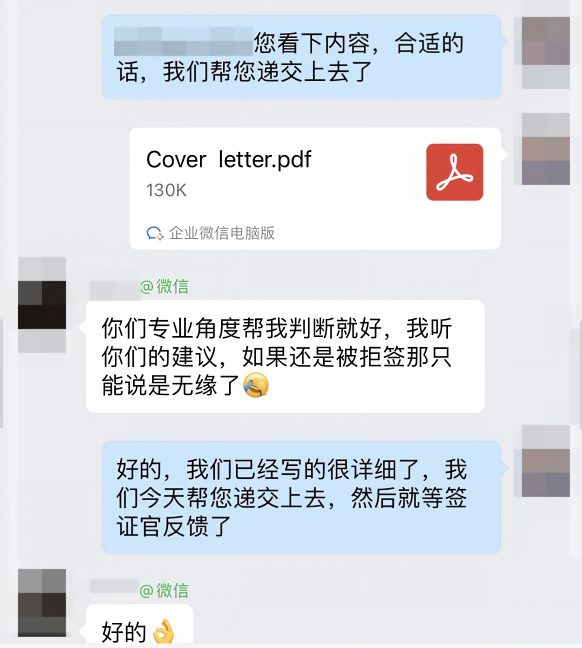
First consultation on 8 June 2026, lodged on 1 July. On 16 July the challenge letter arrived listing three areas at once: the source and availability of funds, his ties to China, and the years-long career gap. The moment a letter like this arrives, the case enters the priority-assessment list.

NZ student visa challenge response record
Lodgement record of the challenge-response documents

Key Challenges

Ample funds, questioned source. Years without formal full-time work — the officer wanted to understand where the large deposits came from.

Long-term overseas, weak domestic ties. Living in Thailand since 2016 — even recent property purchases in China didn't convince the officer his ties were sufficient.

36 years old, graduated from a vocational college in 2013, years away from front-line IT work — the rationale for language course then master's needed arguing.

What We Did

The funds explanation was built as a system. Where a deposit came from, how it accumulated, whether it is usable now — scattered answers cannot explain that. We systematically organised years of financial history: sources grouped, movements traceable, so the officer could understand from the documents without guessing。

Key facts backed by documents. Investment returns were not left to verbal claims — formal partnership and distribution agreements substantiated them, and the nature of every large movement was traceable.

Ties to China were told as a real life. Property, parents, plans to return — these were real, substantial parts of his life. Strung together, the ties question stopped floating.

Thirteen years of experience had one main thread. Work, going abroad, investing, returning to study — seemingly disconnected chapters backed by one professional logic. With the main thread standing, returning to study became the natural next step.

Processing Timeline

2026.06.08First consultation; situation assessment completed
2026.07.01Application lodged
2026.07.16Challenge letter received, covering three areas
2026.07.23Explanation documents and supplementary evidence lodged
2026.07.28Approved in principle
2026.08.11Visa granted, multiple entry

Outcome

The visa was granted on 11 August 2026, valid until 19 July 2027, multiple entry. The challenge response was completed within a week of the letter, and approval in principle came 5 days after the further information was lodged — precise. All three challenges were met with documents; that precision is exactly what let this application turn around after the challenge.

Client Feedback

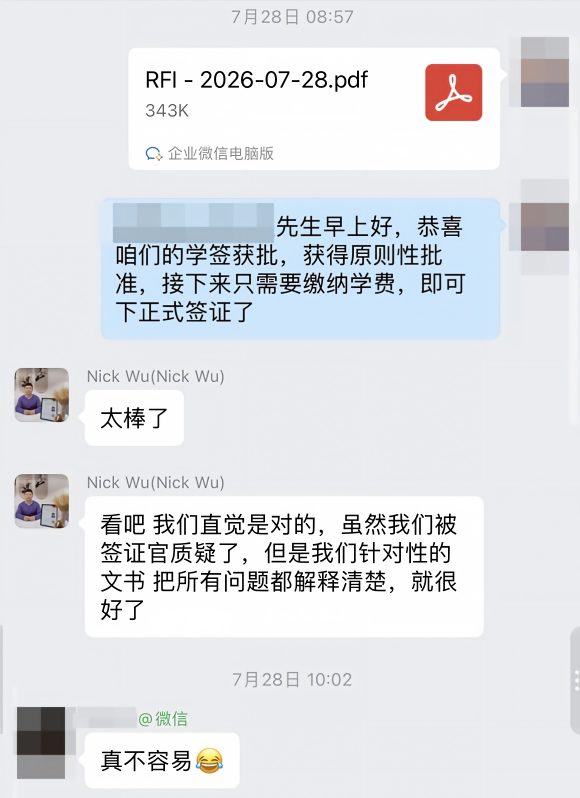
During document preparation the client said something honest: why is this so complicated — it feels like an essay assignment. When the challenge letter arrived, his attitude was: judge it from your professional angle, I'll follow your advice. On the day of approval in principle, the team said in the group chat: yes, the officer challenged us, but our targeted documents answered every question. The client replied: it really wasn't easy.

NZ student visa approval in principle notice
Approval in principle — good news shared

To Applicants in Similar Situations

Whether the deposit is enough was only ever part of the question. Where the money came from, whether the person still has ties to China, whether the motive to study stands — these three are the core of student visa assessment. The more complex the situation, the more worthwhile a complete assessment before lodging becomes.

05Student Visa

A Year Out of Work, Then Approved After a Full-English Interview

New Zealand Student Visa · Master's at Auckland University of Technology

Client Profile
Mr Y · 36 · IT professional returning to campus
Processing Time
20 calendar days
Lodged → Approved
2026.09.02 → 2026.09.22
Further Info / Phone Verification
Yes / Yes (video interview)
One year out of workFunds held by spouseFull-English video interview

Funds scattered across three investment platforms — one English mind-map traced everything from account balances back to salary deposits. The interview question bank was rehearsed in advance, and the full-English video interview closed smoothly. The complete record from consultation to visa is below.

Overview

Mr Y, 36, from Wuhan, spent years in IT. He left his job in August 2025 and lodged a New Zealand student visa in September 2026 while unemployed, targeting a master's at Auckland University of Technology — IELTS raised from 6.0 to 6.5. Study funds came from family savings in his wife's name, scattered across WeChat Licaitong, CMB Wealth Management and Everbright Wealth Management. The gap in employment, the funds structure, the live interview — three questions that all needed good answers. Lodged 2 September, approved 22 September.

Background

First consultation on 1 June 2026. The case carried two built-in disadvantages: nearly a year out of work, and study funds held by his wife, just redeemed from several investment platforms. On 7 September, five days after lodgement, the notice arrived: a full-English video interview.

Key Challenges

Nearly a year out of work — the motive for returning to study had to stand.

Funds in his wife's name, across platforms and redemptions — the source chain was not self-evident.

A full-English video interview: courses, career and funds all explained live, with possible follow-ups.

What We Did

Give the gap substance. A gap is not a blank: IELTS improvement and the master's offer were the most concrete achievements of that period. We explained thoroughly how his career connected to the master's plan — with the motive standing, the doubts dissolved.

Make the funds legible. For the funds in his wife's name redeemed across platforms, we built an English source map tracing everything from account balances back to salary deposits — one continuous line. Cross-checking against it, the officer could see exactly where every sum came from.

Take the mystery out of the interview. The question bank was provided in advance; every likely question category was rehearsed against the application materials, plus several mock rounds. He walked into the interview prepared — not relying on luck.

Processing Timeline

2026.06.01First consultation; situation assessment completed
2026.09.02Application lodged
2026.09.07Video interview notice received; coaching started in parallel
Mid-Sept 2026Full-English video interview completed
2026.09.22Approved; payment formalities completed after approval in principle

Outcome

The visa was approved on 22 September 2026 — 20 calendar days from lodgement, effective 22 December 2026 and valid until 2 July 2028, multiple entry. The gap period, the funds in his spouse's name, the live interview — all three questions had their answers prepared before lodgement, and every later stage of assessment was simply those preparations being verified.

Client Feedback

On interview day the client said: it wasn't as nerve-wracking as I imagined. In the service record, the two things he mentioned most were being followed up throughout, and having someone prepare him for the interview.

Client feedback after the NZ student visa video interview
Communication record after the video interview

To Applicants in Similar Situations

Quitting to study costs you no points. A gap period fails only when it is empty; funds in a spouse's name fail only when the chain is unclear; an interview fails only when it was never rehearsed. All three have proven solutions — provided you leave enough time. If you are also weighing quitting to study, walk us through your funds structure and timeline first — finish the assessment before you resign; there is still time.

06Resident visa

Green List Role Repeatedly Questioned — Whole Family Residency Approved in Six Months

New Zealand Green List Skilled Migrant · Resident Visas for a Family of Three

Client Profile
Mr W · 35 · Software developer, second master's in NZ
Processing Time
About 6 months (23 Jan 2026 → 16 Jul 2026)
Lodged → Approved
2026.01.23 → 2026.07.16
Further Info / Phone Verification
Yes (role verification talks) / None
IT role at a non-IT companyTwice the median wageResident visas for a family of three

Immigration repeatedly asked why a non-IT company needed an IT role at all. Once the company structure, monthly development progress and business photos were laid out, the role stood — and the family of three secured their resident visas within six months. How the road was walked is documented below.

Overview

Mr W, 35, from Tangshan, works in software development and had already completed a master's in France. His goal in New Zealand was direct: an IT master's, then Green List skilled migration on graduation — with his spouse and child coming along. PTE 60 before enrolment; by the time the resident visa application was lodged he already held a matching job paying twice the median hourly rate. Lodged 23 January 2026, approved 16 July — resident visas for the family of three, about six months end to end.

Background

After completing a master's in France and working a few years, he wanted to relocate the whole family. He chose New Zealand for its Green List policy — a matching qualification plus an accredited employer made the pathway clear. His planning prized efficiency: a second master's, short in duration, connecting straight to Green List requirements on graduation — in his own words, short, fast and direct.

The resident visa application was lodged on 23 January 2026. On 9 February Immigration's query arrived — addressed not to him but to his employer. The company was not an IT business, and Immigration wanted to know why a dedicated IT technician role had been created instead of simply buying third-party software.

Key Challenges

Why the role exists. In Green List skilled migration, assessment goes far beyond payslips — Immigration will probe whether there is real work for this role, or whether it was created for a visa.

Why the high wage. Twice the median hourly rate, in a small remote city — the reason for paying that much also had to be explained.

A family of three. With spouse and child included, the paperwork doubled — one person's information going wrong could slow the entire family.

What We Did

Let the role stand on its own facts. A hundred explanations are worth less than one fact. The company's actual business and what the role did within it were organised into exactly the answers Immigration needed to verify — and every round of questioning was met with documents. There were no further questions afterwards.

Make the salary make sense. Twice the median wage was justified by the value of the work: skills the market could not supply, and a role the company could not operate without. Once that logic was fully argued, the number stopped being a doubt.

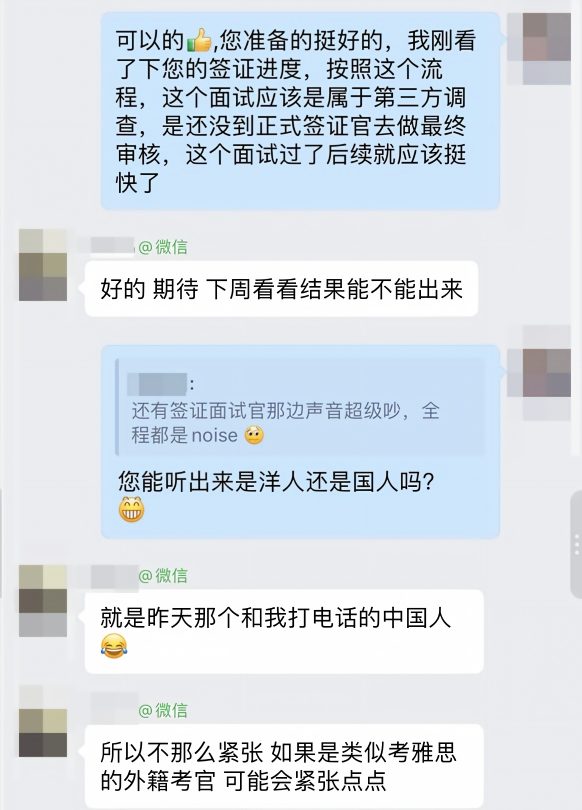
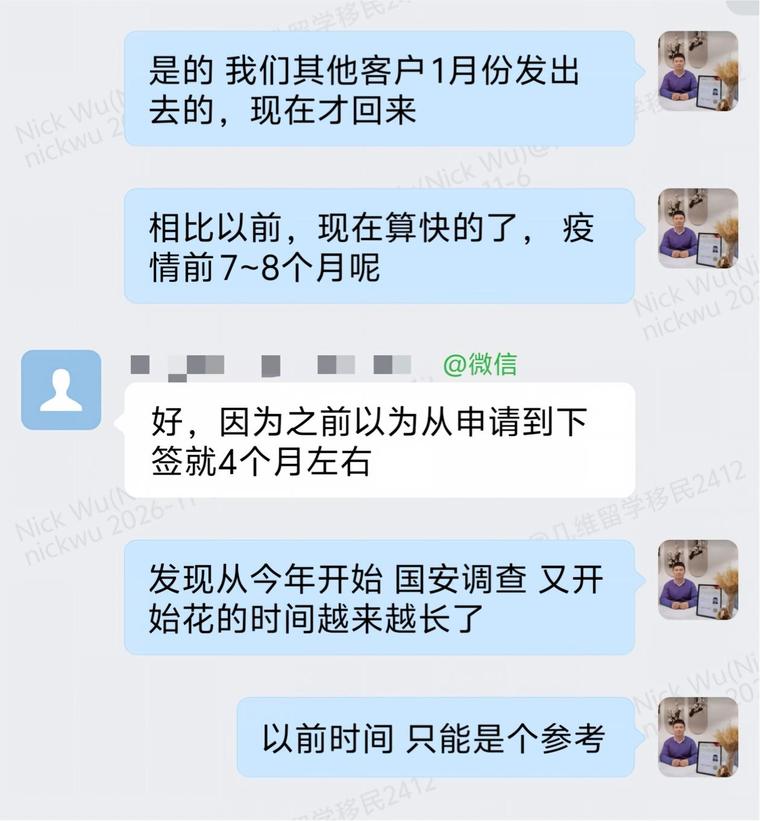
With them through the wait. Processing ran longer than expected. In late April he asked about progress; we gave him the honest picture — national security checks were slower across the board this year, and cases lodged in the same window were only just coming back. We told him to settle in and wait.

NZ skilled migration progress communication record
Progress communication during processing: security-check context and assessment rhythm

Processing Timeline

2026.01.23Resident visa application lodged
2026.02.09Immigration discussed role genuineness with the employer
2026.04.24Client progress enquiry; assessment rhythm shared
2026.07.16Resident visas approved for the family of three

Outcome

The visas were approved on 16 July 2026 — resident visas for all three, about six months from lodgement. That was longer than the four months the client had expected, and the reason was not the documents: security-check processing slowed across the board this year, and cases lodged in the same window ran similar timelines. Everything on the document side had been done; after the role verification, Immigration never came back with more questions.

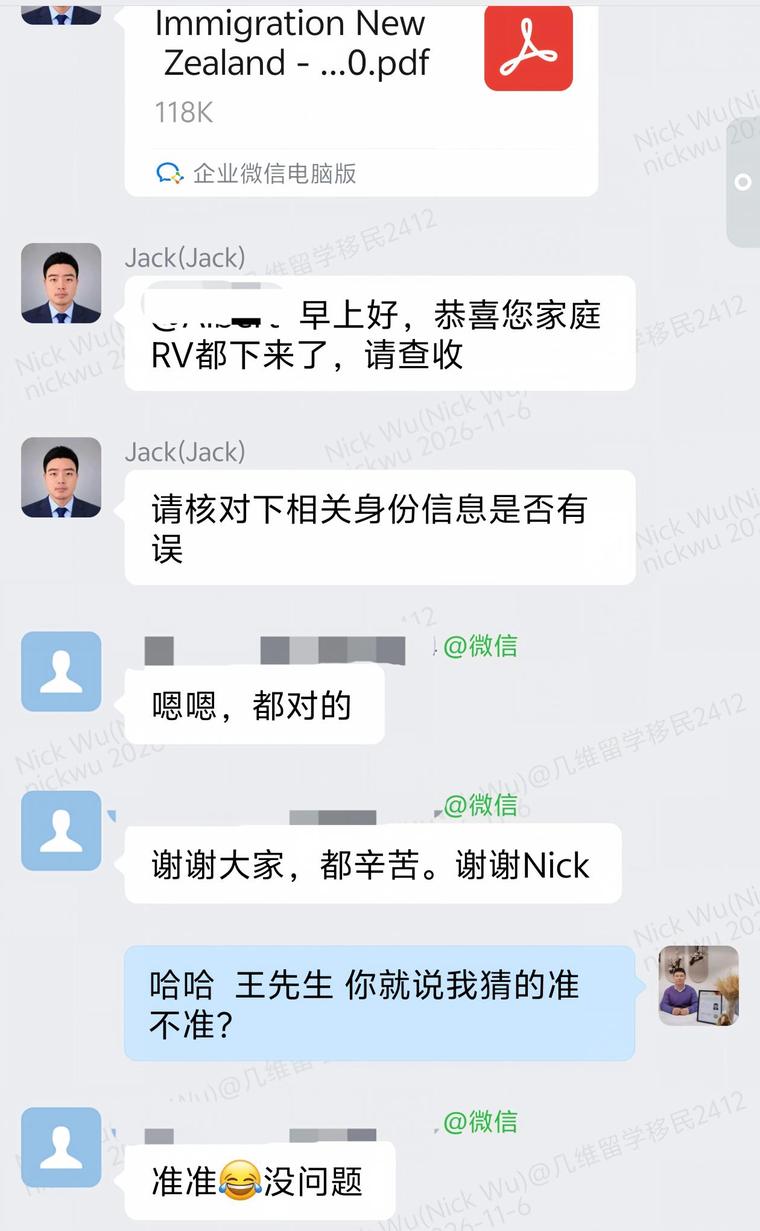
NZ skilled migration family resident visa approval notice
Approval good news, the day the family of three got their resident visas

Client Feedback

On approval day the adviser posted the approval letter in the group chat and asked him to check his personal details. He replied: yep, all correct. Thanks everyone, great work. The adviser joked: Mr Wang, didn't I call it? He answered: spot on, no problem.

To Applicants in Similar Situations

In Green List skilled migration, meeting the wage threshold is only the entry ticket. Why the role exists, and whether the person actually does real work in it — Immigration will verify all the way through. These should be thought through and prepared before lodgement. If you are also planning study-plus-skilled-migration, tell us your qualifications, occupation and target role, and we will review the feasibility first.

07Resident visa

Chinese Literature to Quantity Surveying: Family of Three Approved in Two Months

New Zealand Green List Skilled Migrant · Resident Visas for a Family of Three

Client Profile
Mr X · about 37 · Chinese literature background crossing into quantity surveying
Processing Time
2 months (Feb 2026 → Apr 2026)
Lodged → Approved
2026.02 → 2026.04
Further Info / Phone Verification
None / None
Chinese bachelor's crossing into quantity surveyingRe-doing a three-year bachelor's in his 30sGraduating straight into a matching job

A Chinese literature graduate, in his 30s, with a family of three — he re-did a three-year bachelor's degree, moved into a quantity surveying role on graduation, lodged his resident visa, and had it approved in two months. How the numbers added up, and how the road was walked, is documented below.

Overview

Mr X, born in 1989, held a bachelor's in Chinese literature. In 2023 he brought his family to New Zealand and started a three-year quantity surveying bachelor's from scratch — zero English on arrival, beginning with NZCEL Level 4, which satisfied the entry requirement. On graduation he moved smoothly into a matching quantity surveying role; in February 2026 the Tier One Green List skilled migration was lodged, approved in April — resident visas for the family of three, only 2 months of processing, no further information, no phone verification.

Background

When the family decided to migrate to New Zealand, the first question before Mr X was not money but what to study. With a Chinese literature bachelor's, no suitable master's pathway existed. Quantity surveying was different — Tier One of the Green List, connecting directly to the migration pathway on graduation.

The cost was laid out plainly too: re-doing a bachelor's, three years, already in his 30s with a young child. After a period of hesitation he committed to this path. Looking back, he said that at the start three years felt long — once studying, the time flew.

Key Challenges

A late-career field change. From Chinese literature into quantity surveying — humanities to engineering, with heavy calculation and standards content. Nobody was certain he could carry it at the start.

Zero English on arrival. No IELTS, no PTE — he had to clear the language barrier first, completing NZCEL Level 4 before formally entering the bachelor's.

The Green List employment threshold. Skilled migration requires a full-time matching job, median wage or above, and an accredited employer — all three, no exceptions. Quantity surveying wages generally reach the median, so the employment side carried less pressure — but the step from graduation to employment still had to be timed precisely.

What We Did

First, work out the maths. A Chinese master's had no matching exit. A three-year bachelor's was long, but it led straight to a matching job and then Tier One of the Green List — one line walked to the end. We laid that line out clearly, weighing time cost against employment prospects — and once the counting started from there, the hesitation simply landed.

Clear the language barrier first. After finishing NZCEL Level 4 he went straight into the bachelor's — no gap in between.

Graduate, then straight into the job. After three years he moved into a matching quantity surveying role — full-time, accredited employer, wage above the median. All three Green List hard requirements were met in one go: lodged February 2026, approved April.

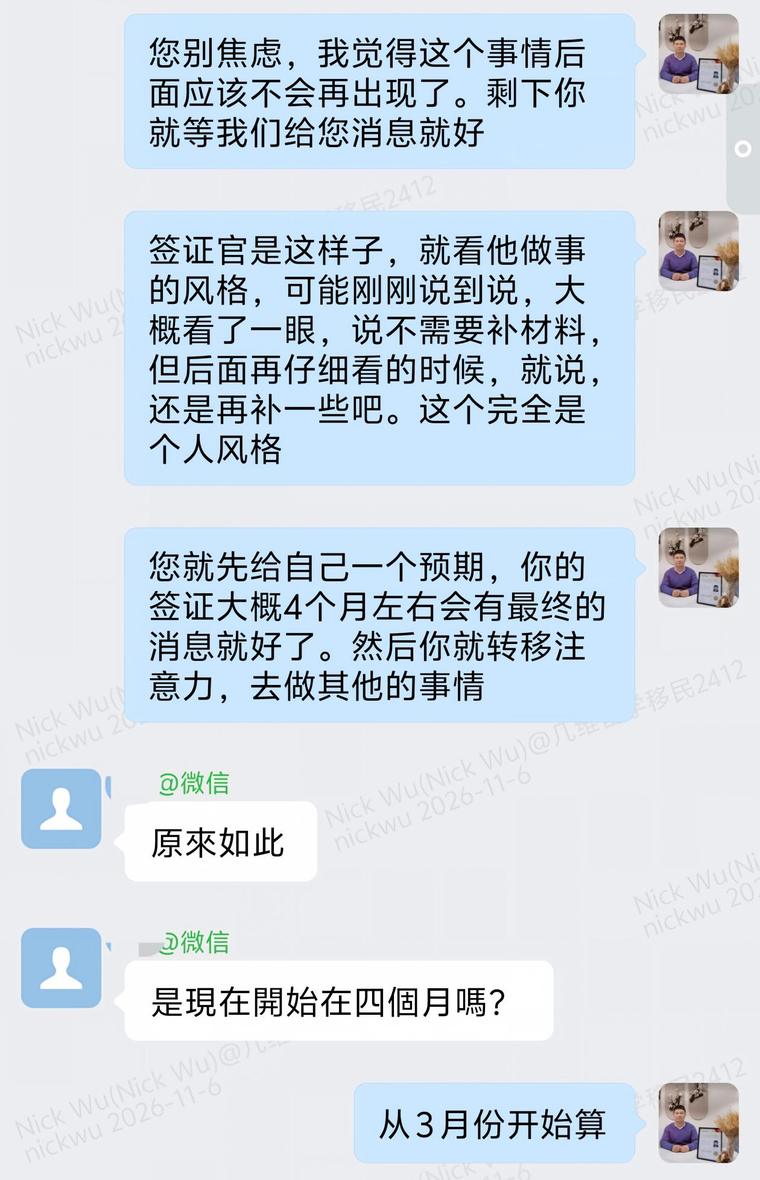
NZ skilled migration expectation-management communication record
Communication during processing: the adviser explained officer style and assessment expectations

Processing Timeline

2023Family of three arrived in NZ; after NZCEL Level 4 he entered the quantity surveying bachelor's
Early 2026Bachelor's completed; joined a matching quantity surveying role
2026.02Tier One Green List skilled migration lodged
2026.04Resident visas approved for the family of three

Outcome

The visas were approved in April 2026 — resident visas for the family of three, two months from lodgement, no further information, no phone verification. A Tier One Green List case with solid documents simply ran smoothly. During processing the adviser had set expectations at about 4 months so he could settle in; the actual result was twice as fast. He later said himself: mine was pretty quick.

NZ skilled migration family resident visa approval notice
Approval good news, the day the family of three got their resident visas

Client Feedback

On approval day the adviser posted the approval letter in the group chat. He saw it a day later and replied: whoa, thank you! I only just saw this — but mine was pretty fast! The joy was unmistakable.

To Applicants in Similar Situations

Older applicant, changing fields, zero English — put together, these sound like reasons to quit. But study migration is not won by a high starting point; it is won by choosing the right pathway. Does the major have a matching exit? Can graduation connect to the Green List? How is the language plan arranged? Once those three accounts are worked out, the three years pass quickly. Tell us your education background and family planning, and we will work through the numbers together first.

08Resident visa

Career Change at 43 into Early Childhood Education — Family of Four Granted Residency

New Zealand Skilled Migrant · Resident Visas for a Family of Four

Client Profile
Ms L · 43 · Journalism to early childhood education
Processing Time
About 5 months (Jan 2025 → Jun 2025)
Lodged → Approved
2025.01 → 2025.06
Further Info / Phone Verification
Yes (spouse English evidence added) / None
Career change at 43 into ECEFamily of fourMedian wage threshold

At 43 she moved from journalism into an early childhood education master's, worked at a kindergarten during her studies, and the employer remembered her diligence — graduating into an hourly rate above the median. The family of four had their resident visas approved within half a year. How the road was walked is documented below.

Overview

Ms L, 43, had worked in journalism in China with a journalism bachelor's to match. In 2024 she brought the family's migration plan to New Zealand and began an ECE master's, scoring fours across all four PTE bands. Study funds came from the couple's work savings. During her ECE studies she worked solidly at a kindergarten — hired directly by that employer on graduation at an hourly rate above the median. Skilled migration lodged in January 2025; the family's resident visas approved in early June.

Background

Deciding to study at 43, most advisers' first reaction was to tell her to think again. But her maths was clearer than anyone's. Years in journalism, a family wanting to migrate — choosing a major meant checking three things: does immigration policy recognise it, how easily can graduates find work, and can she carry the coursework herself. ECE checked all three: New Zealand has a long-standing shortage of ECE teachers, graduates have a high chance of matching offers, and the Green List pathway recognises it.

In 2024 she began the ECE master's while her husband and children settled alongside. During her studies she worked solidly at a kindergarten — diligent, and the employer remembered it. She finished the coursework in 2024, joined that same kindergarten smoothly on graduation, at an hourly rate not just meeting the median but a clear step above it. In January 2025, the skilled migration application was lodged.

Key Challenges

Age and the span of the change. At 43, from journalism to early childhood — a whole industry apart, with coursework, practicum and employment all non-negotiable.

The median wage threshold. Skilled migration requires meeting the wage bar, and that depends half on the industry, half on the employer. ECE pay sits around the median — getting above it depended on whether the employer valued the person.

The paperwork for four. Husband's and children's information all lodged together, and mid-assessment the husband's English score had to be supplemented — not a smooth ride overall.

What We Did

The pathway was laid in advance. ECE master's, matching employment, skilled migration — every step of this line was planned before enrolment, with the major chosen directly against post-graduation employment and migration criteria. No detours.

The job had been laid a year ahead. Her kindergarten practice during study was both a course requirement and a window for her future employer. Diligent and professional, she was watched closely — hired directly on graduation at an hourly rate above the median. The hardest gate of skilled migration was solved a year ahead, during that year of real work.

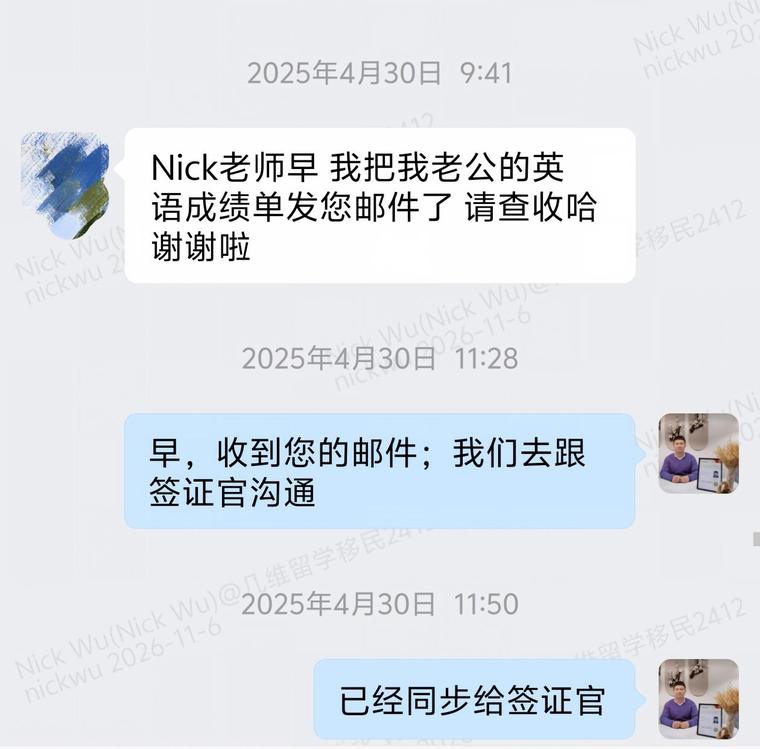
Documents followed up proactively. In late April the spouse's English transcript was needed; the client sent it that day and we forwarded it to the visa officer the same day — no waiting for Immigration to chase. Where speed mattered, nothing was delayed.

NZ skilled migration further-information communication record
Spouse English evidence added, forwarded to the visa officer the same day

Processing Timeline

2024Family of four arrived in NZ; Ms L began the ECE master's
2025.01Skilled migration application lodged
2025.04.30Spouse English evidence added, sent to the visa officer the same day
2025.06.03Resident visas approved for the family of four

Outcome

The visas were approved on 3 June 2025 — resident visas for the family of four, about five months from the January lodgement, no phone verification. Near the end she said herself that the last two months weighed on her more — waiting for results is not a pleasant taste. Once the result came, the anxiety cleared to zero and the passports went straight into processing.

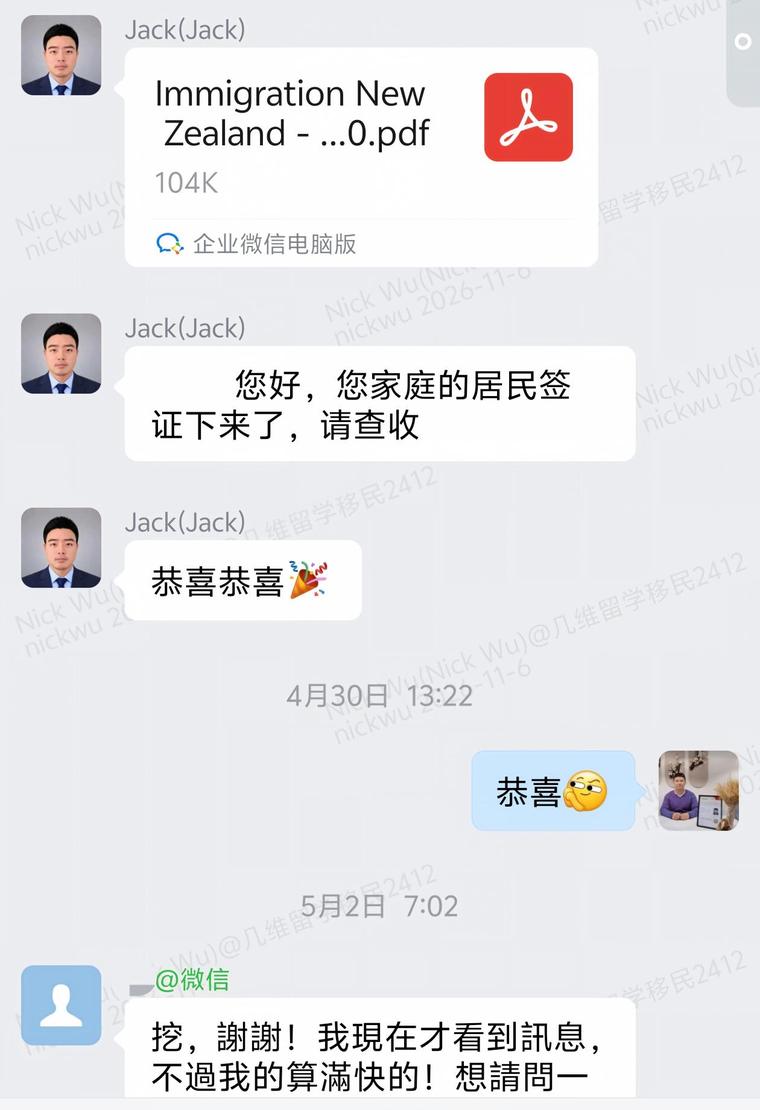
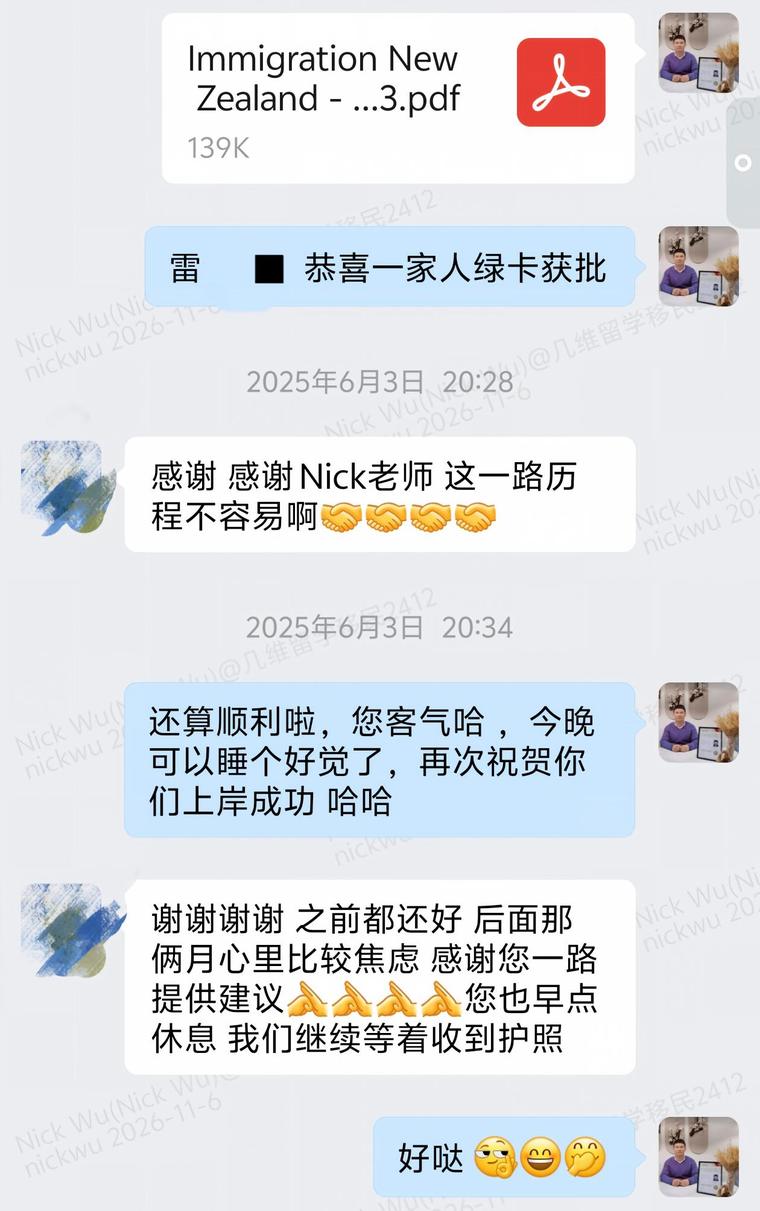
NZ skilled migration family resident visa approval notice
Approval good news — resident visas in hand for the family of four

Client Feedback

That evening the client sent a message: Thank you, thank you Mr Nick — this road was not easy. The earlier part was fine, but the last two months I was quite anxious. Thank you for advising me the whole way. The adviser replied: it went fairly smoothly overall — and thank you for saying so. You can sleep well tonight. Once again, congratulations on making it ashore.

To Applicants in Similar Situations

A career change at 43 with a family of four — on paper, the hardest combination. But she landed every step: the right major, real effort during study, and graduation that connected directly to migration criteria. Age was never the bottleneck; the pathway was. Tell us your age, occupation and family situation, and let's look together at which route works.

09Resident visa

Cross-Border Relationship, Two Further-Information Rounds — Mother and Sons Granted Residency

New Zealand Partnership Resident Visa · Principal Applicant with Two Children

Client Profile
Ms T · 38 · Malaysian national · settled in Christchurch
Processing Time
About 6 months (192 days), two further-information rounds
Lodged → Approved
2026.04.13 → 2026.10.22
Further Info / Phone Verification
Yes (twice) / None
Cross-border relationship timelineCohabitation evidence continuously updatedConsent from a previous marriage's child

In 2025 the partner work visa was approved in 19 days; in 2026 the resident visa went through two further-information rounds, and the mother and sons' status was settled in October. The complete record is below.

Overview

Ms T, a Malaysian national, lives in Christchurch with her husband, who holds a New Zealand permanent resident visa. They have two sons, the elder from her previous marriage. This application was a New Zealand partnership category resident visa, with the principal applicant including two children. A relationship spanning three countries, cohabitation evidence needing constant updates, and the consent of a previous marriage's father — three types of complexity gathered in a single case. Lodged on 13 April 2026; on 22 October, resident visas approved for the mother and both sons.

Background

This relationship was more winding than most. They knew each other as children, reconnected in 2021 and became partners, then lived apart — one in New Zealand, one in Singapore — for two years. In 2024 Ms T resigned from her sales job in Singapore, moved to New Zealand to live together, and the couple married. In July 2025 she came to us for the partner work visa: lodged 8 August, approved 27 August — just 19 days. With the temporary visa settled, on 17 March 2026 the family's permanent residency plan formally went on the agenda.

Key Challenges

A relationship spanning three countries. Childhood acquaintance, long-distance dating, moving in together in New Zealand, marriage and children — every stage needed supporting evidence.

Cohabitation evidence kept current. Immigration first checked the 12 months of cohabitation proof before application, then twice requested updated materials during assessment.

Consent for the child from her previous marriage. Permanent relocation of the elder son required the biological father's explicit consent — a strict procedural requirement.

What We Did

Telling a long relationship as one timeline. More than a decade of history, from childhood acquaintance to a cross-border marriage — many milestones, wide span. We organised it into one complete timeline: a genuine relationship is proven not by adjectives but by dates and facts.

Keep the evidence live. Cohabitation proof had to cover the 12 months before application and keep updating during assessment. Both further-information rounds were met on time — the relationship's continued development was verifiable throughout.

Run the guardianship process properly. Relocation consent for a child from a previous marriage involves the biological father's rights — witnessed signing could not skip a single step. Every hard procedural requirement was met, leaving no hidden risk.

Processing Timeline

2025.07First consultation on the partner work visa
2025.08.08Partner work visa lodged
2025.08.27Partner work visa approved in 19 days
2026.03.17Resident visa planning began
2026.04.13Resident visa lodged, principal applicant with two children
2026.07.31Pre-allocation document check: 12 months of cohabitation evidence verified
2026.08.07First further-information round
2026.09.25Further information request covering relationship, cohabitation and the children's father's consent
2026.10.09Second further-information round completed
2026.10.22Resident visas approved for the mother and both sons

Outcome

On 22 October 2026, Ms T and both sons had their resident visas approved. From the 2025 partner work visa to permanent residency in 2026 — the complete pathway from temporary visa to residence, walked with the same team for over a year. Two further-information rounds in 192 days of processing, each answered on time — long-period cases are won by exactly this kind of uninterrupted follow-through.

To Applicants in Similar Situations

Partnership resident visas are assessed on the genuineness of the relationship. Cross-border relationships, long-distance stages, children from a previous marriage — we have seen and walked every one of these complexities. If you are planning the move from work visa to residence, start with a full assessment of your pathway and documents.

Contact

Wondering which UK tier or which HK university you can reach?

Book a 1-on-1 UK & HK assessment — 30 minutes to map out your dual-track pathway.

WeChat · OfficialScan to add adviser on WeChat Nick

Scan to add adviser Nick

Fill in a short assessment form and we will match you with the right adviser